

Last time we discussed reproductive autonomy’s inseparability from women’s decisional capacity and thus with their fitness for both freedom and republican citizenship. This week, we take on gay marriage and LGBTQ equality more generally. Marriage equality remains on the books, for now at least. But don’t take things for granted. Even setting aside that Justice Anthony Kennedy’s vague and rambling decision in 2015’s Obergefell v. Hodges did not adequately explain why squishy concepts like dignity are, actually, valid constitutional considerations, recent developments put all this at risk. The Court’s reasoning in Dobbs, its exclusion of queer folks from settled civil accommodations law in 303 Creative v. Elenis, and its present docket each threaten to strip what equality queer Americans have won in the last two decades.
Like abortion, the debate over gay marriage does not really concern the particular right claimed but rather the equal human dignity and decisional capacity of a perceived “other.” That, conclusively, is what “the Constitution . . . [has] to do with it.” Unlike abortion, however, which reactionaries damn as an abomination in all instances (save, in utmost secrecy, the conveniency of their mistresses, wives, and daughters), opponents of gay marriage debate do not deny the importance of marriage or its status as a Constitutional right. As Chief Justice Roberts detailed in his Obergefell dissent:
From their beginning to their most recent page, the annals of human history reveal the transcendent importance of marriage. The lifelong union of a man and a woman always has promised nobility and dignity to all persons, without regard to their station in life. Marriage is sacred to those who live by their religions and offers unique fulfillment to those who find meaning in the secular realm. Its dynamic allows two people to find a life that could not be found alone, for a marriage becomes greater than just the two persons. Rising from the most basic human needs, marriage is essential to our most profound hopes and aspirations.
The centrality of marriage to the human condition makes it unsurprising that the institution has existed for millennia and across civilizations. Since the dawn of history, marriage has transformed strangers into relatives, binding families and societies together. Confucius taught that marriage lies at the foundation of government. This wisdom was echoed centuries later and half a world away by Cicero, who wrote, “The first bond of society is marriage; next, children; and then the family.” There are untold references to the beauty of marriage in religious and philosophical texts spanning time, cultures, and faiths, as well as in art and literature in all their forms.
In his first American dictionary, Noah Webster defined marriage as “the legal union of a man and woman for life,” which served the purposes of “preventing the promiscuous intercourse of the sexes . . . promoting domestic felicity, and . . . securing the maintenance and education of children.” An influential 19th-century treatise defined marriage as “a civil status, existing in one man and one woman legally united for life for those civil and social purposes which are based in the distinction of sex.” The first edition of Black’s Law Dictionary defined marriage as “the civil status of one man and one woman united in law for life.”
This Court’s precedents have repeatedly described marriage . . . as “the union for life . . . which forms “the foundation of the family and of society, without which there would be neither civilization nor progress,” . . . as “fundamental to our very existence and survival.”
In other words, marriage equality presents a sort of inverse to the usual reactionary rejection of a claimed right. Marriage is certainly a right—it’s sacred! Too sacred, in fact, to be shared with those who would degrade it. Reactionaries would deny LGBTQ folks’ competence to share in that most fundamental of choices—whom to build a life with, whom to raise a family with, and whom to love. And, as before, one incompetent to govern their most intimate affairs is surely incompetent to partake in civil and political society.
Both the rapid embrace of LGBTQ Americans into mainstream(ish) society over the last twenty-or-so years and the Right’s backlash, portraying gay and trans Americans as some sort of “woke” invention of this recent era, can obscure American law’s deeply rooted animosity toward queer folks. So it’s worth taking a very brief and truncated spin through history to illustrate that American law has long acknowledged and abhorred the existence of LGBTQ people. For this summary, I draw heavily on the work of Professor William Eskridge, who literally wrote the many books on the subject.
We ought to begin by recognizing the somewhat exclusionary nature of framing the matter of LGBTQ rights and equality around marriage in the first place. Whether or not you believe marriage intractably patriarchal (I’d like to think it’s not—if my work shows anything, it’s that we can royally fuck up even the nicest things), we have to recognize that not everyone wants marriage. Equality must extend beyond the blessing of relationships that just look like “traditional” ones, and certainly beyond mere tolerance for divergence from “traditional,” procreative, marital sex behind closed doors, and must instead embrace queer folks as equally morally good and valuable members of our society. But, as previously noted, the marriage equality debate offers a useful lens because it isn’t really about marriage. Nor has it really been about “traditional” or prudish discomfort with homosexual activity.
To be sure, it sort of, theoretically, started that way. The Common Law’s preoccupation with “theology-based unnatural acts” imposed severe punishments, including burning or burying alive. British colonists naturally carried this tradition with them to the New World. As Chief Justice Burger concurred in 1986’s Bowers v. Hardwick, upholding Georgia’s criminalization of sodomy:
During the English Reformation when powers of the ecclesiastical courts were transferred to the King’s Courts, the first English statute criminalizing sodomy was passed. Blackstone described “the infamous crime against nature” as an offense of “deeper malignity” than rape, a heinous act “the very mention of which is a disgrace to human nature,” and “a crime not fit to be named.”
The creation of a theologically condemned class would have obvious (if not yet particularly relevant) political implications—how could the God-fearing folk of Britain and the Colonies subject themselves to rule by votes of the presumably damned? Indeed, despite the bombastic rhetoric and potential violence, such broader societal implications seemed to be the point, at least more than actually rooting out and preventing homosexual encounters. As Eskridge notes, antisodomy laws were rarely deployed against consensual homosexual activity until the Gilded Age.
All this began to change in the 1880s and 1890s as American law transformed queer folks from the Common Law’s “heretical sodomite” first into the “degenerate sexual invert” and then into the “psychopathic homosexual,” revealing more openly the political implications of Americans’ newfound and rather obsessive regulation of queer bodies. When early sexologists described of one’s departure from traditional gender norms as “congenital defect,” “sexual pathology,” “degeneration, or reversion,” regulators ran wild with the notion of a societal infection. “All vice and crime,” one commentator maintained, “could be traced to ‘the degenerate classes,’” chiefly including “sexual inverts.” Eskridge recounts:
More alarmingly, degeneracy was thought to be a social disease that can be passed on to the next generation, both through inheritable characteristics and the bad examples set by degenerates to the young. As cures, [some doctors] proposed bans on marriage by degenerates, eugenic castration, and sterilization.
Anthony Comstock—yes that Comstock, whose eponymous and draconian Act the Right now seeks to wield against the transport of medication-abortion prescriptions, and perhaps even medical implements for other procedures—captured the spirit: “These inverts are not fit to live with the rest of mankind.” The postal potentate’s involvement heralded serious Federal intervention.
Immigration law had already provided for the exclusion of alleged prostitutes, among other purveyors of “moral turpitude,” the 1917 Act “added a new category of excluded individuals: persons suffering from ‘constitutional psychopathic inferiority.’” Or, as the Commissioner-General of Immigration put it, “nothing can be more important than to keep out of the country the anarchistically [sic] and criminally inclined and the degenerate of sexual morality.” Unsurprisingly, Federal officials targeted gay men. Following the First World War and several “disturbing” (and embarrassing, if utterly unsurprising) revelations about homosexual activity at Newport (Rhode Island) Naval Training Station, the military moved to eject “medical degenera[tes].” Army Regulation 40-105 detailed various anatomical “stigmata of degeneracy” and functional, including “sexual perversions,” and “excluded recruits who showed signs of constitutional psychopathic state, including sexual psychopathy, which made them incapable of attaining a satisfactory adjustment to the average environment of civilized society.”
The 1920s marked yet another shift. (Mis)interpretations of Freud transformed the “congenital invert” into the “homosexual . . . the failed product of an easily derailed psychosexual development . . . more of a social threat . . . sexually out of control and even predatory.” Dr. Paul Bowers of the Indiana State Prison offered a representative opinion that “the homosexual was the quintessential psychopath,” explaining:
Not all expressions of homosexuality are to be regarded as evidence of insanity, yet it may be safely said that the majority of sexual perverts are psychopathic individuals.
Sexual perverts of the most disgusting types are found among the psychopaths.
Whether these anomalies of the sexual instinct are always congenital or not has not been settled, and it does seem that inverse and perverse sexual habits may be acquired early in life by association with vicious and depraved individuals. The sexual perverts are at any rate an exceedingly dangerous and demoralizing class which should be permanently isolated to prevent their mingling with others.
While none could reasonably mistake the political implications of labeling people innate criminals and social outcasts, with the close of the Second World War, regulators upped the rhetoric again: reclassifying LGTBQ folks as an existential threat to the State.

It started quite naturally with redoubled exclusion from the military and denial of G.I. Bill benefits to gay men (and women, for that matter, given the act tied benefits to marriage), but quickly escalated into witch-hunts across the Federal bureaucracy. A newsletter from the National Republican Party Chairperson warned that “[s]exual perverts . . . have infiltrated our Government in recent years” and reckoned they were “as dangerous as actual Communists.” A Senate investigative report concluded:
[T]hose who engage in overt acts of perversion lack the emotional stability of normal persons and indulgence in acts of sex perversion weakens the moral fiber of an individual to a degree that he is not suitable for a position of responsibility . . . One homosexual can pollute an entire office [of the government.]
Congress even declared “homosexuals and other sex perverts to be an enemy of the state because of their threat to American youth, public morals, and national security.” It should come as no surprise that “[b]y the 1950s, citizenship for homosexuals was conditioned upon their willingness to be closeted.”
We need not belabor the obvious. The matter of same-sex marriage never really turned on marriage. And, for that matter, to the extent it ever really turned on prudish discomfort with sex, we left that behind long, long ago. For at least the last century, American law has regulated LGBTQ folks with the express purpose of relegating them from the body politic. Though never enslaved or formally disenfranchised, their classification as various forms of mental deficiency or degeneracy, exclusion from immigration, expulsion from the military and civil service, and surveillance designed to suppress and drive them from society all rested on the notion of queer folks’ inherent indignity and decisional incapacity, and thus necessarily if implicitly their lack of fitness for democratic self-governance.
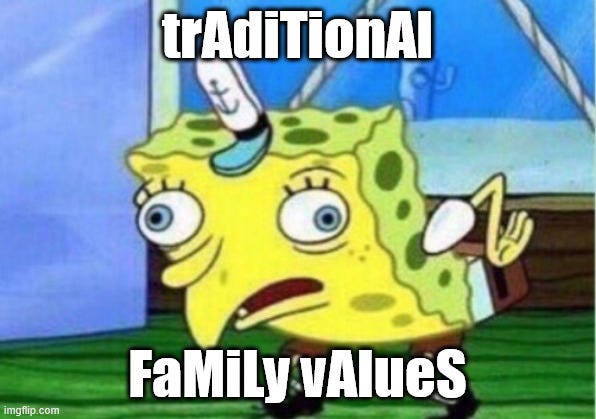
Constitutional arguments in favor of gay marriage have run the gamut from extending the right to privacy and First Amendment protected expression to unwarranted gender discrimination based on the underlying right to marriage. These are all very nice and lawyerly arguments, but it should be clear enough now (if a little ironic) that Justice Kennedy’s pontifications about dignity and being nice to gay people (in otherwise stable and traditional relationships) proves nearest the mark—even if he never could really articulate it as a constitutional matter. However undeveloped, Kennedy’s discomfort with the vilification of LGBTQ folks—evident previously in his decisions decriminalizing consensual-same-sex relations in Lawrence v. Texas or striking down a weird constitutional referendum in Colorado barring queer folks from statutory civil rights protections (such as had been enacted in Denver, Boulder, and Aspen) in Romer v. Evans for displaying bare “animus”—grasps the core of equality. Indeed, conservatives’ continued tantrums, either equating same-sex marriage to bestiality, pedophilia, or other forms of non-consensual (and thus subordinative) relations, or their attempts to recast themselves as the victims of some grand (and intolerant) “homosexual agenda” (always refusing to address the long history summarized above, of course), betray an implicit understanding that these equality fights revolve not around “traditional family values” but around animus and subordination. The rights, privileges, or dignities we strip from or deny to disfavored groups in order to subordinate them are the best evidence that we’ve stumbled, however accidentally, across the contours of citizenship and personhood. Denial of access to a right so universally recognized as fundamental as marriage should prove the case doubly so. It just cannot be overemphasized that those whom we deem incapable of handling their private affairs we quickly and easily deem incapable of republican citizenship.

Not yet long enough ago in Romer, Justice Scalia sought to uphold Colorado’s anti-LGTBQ constitutional filibuster in part on the Court’s previous “approv[al of] a territorial statutory provision that went even further, depriving polygamists of the ability even to achieve a constitutional amendment, by depriving them of the power to vote.” I suspect many took the jab as just another entry in the canon of Scalia rhetorical bluster which conservatives recite in sleepless whispers. It wasn’t bluster. In the name of “traditional” religious exercise the Court has since stripped queer Americans of equal civil accommodations. In the name of parental rights and vague invocations of propriety, the Court looks set to bless the erasure of LGBTQ Americans’ existence from public school curricula. And it has recently permitted the expulsion of trans people from the military. Beyond chipping away at queer Americans’ ability to partake equally in their nation’s civil, economic, and (ultimately) political life, each of these moves deny their fitness to. Certainly more than a few steps remain between us and the recriminalization and disenfranchisement of queer Americans. But just ask Black Americans, the path is well trod.
Bobby did the hard work here of summarizing the legal history of LGBTQ political disenfranchisement. Some might say "so what? we knew this, didn't we?" but it's articles like this that get cribbed into amicus briefs that later end up in those middle sections of SCOTUS opinions we tried to skip over in ConLaw. Necessary evils.