

I had not intentionally timed my rereading of James Willard Hurst’s classic Law & the Conditions of Freedom (in the Nineteenth Century United States) (Wisconsin Press 1956) with the week’s hysteria regarding the looming specter of socialism in New York, but the Lord works in mysterious ways. Strictly speaking, Hurst’s telling uncovers no buried history and tradition of actual socialism in American law—that is, collectivization of private property and industry and whatnot—but it doesn’t have to. For one, nineteenth century American law recounts the story of men (sigh) very slowly realizing, after a prolonged initial boom, that their inherited political-economy of a sacralized private property had some…structural flaws. For another, Hurst’s account of nineteenth century America reveals such a wholesale application of State power to cultivate predictable markets and allocate resources to the encouragement and welfare of “free” enterprise, that—were it directed toward anyone other than a white, landholding male—Democrat and Republican alike would decry today as socialism!
For Hurst, the myth of laissez faire in the American economy is, in a word, bullshit. By private property, the State delegates control over its resources to private individuals (and later, corporations). By contract, the State goes to bat for private parties to enforce duties and obligations imposed not by society but by the parties themselves. And beyond picking and choosing which preferred private parties the State elects to imbue with its coercive force, it also determines which behaviors to encourage (and which to discourage) across every other area of law, such as the limitation of damages to a narrow band of anticipated costs in contract. All law begins with policy. And in the nineteenth century, that policy was business.
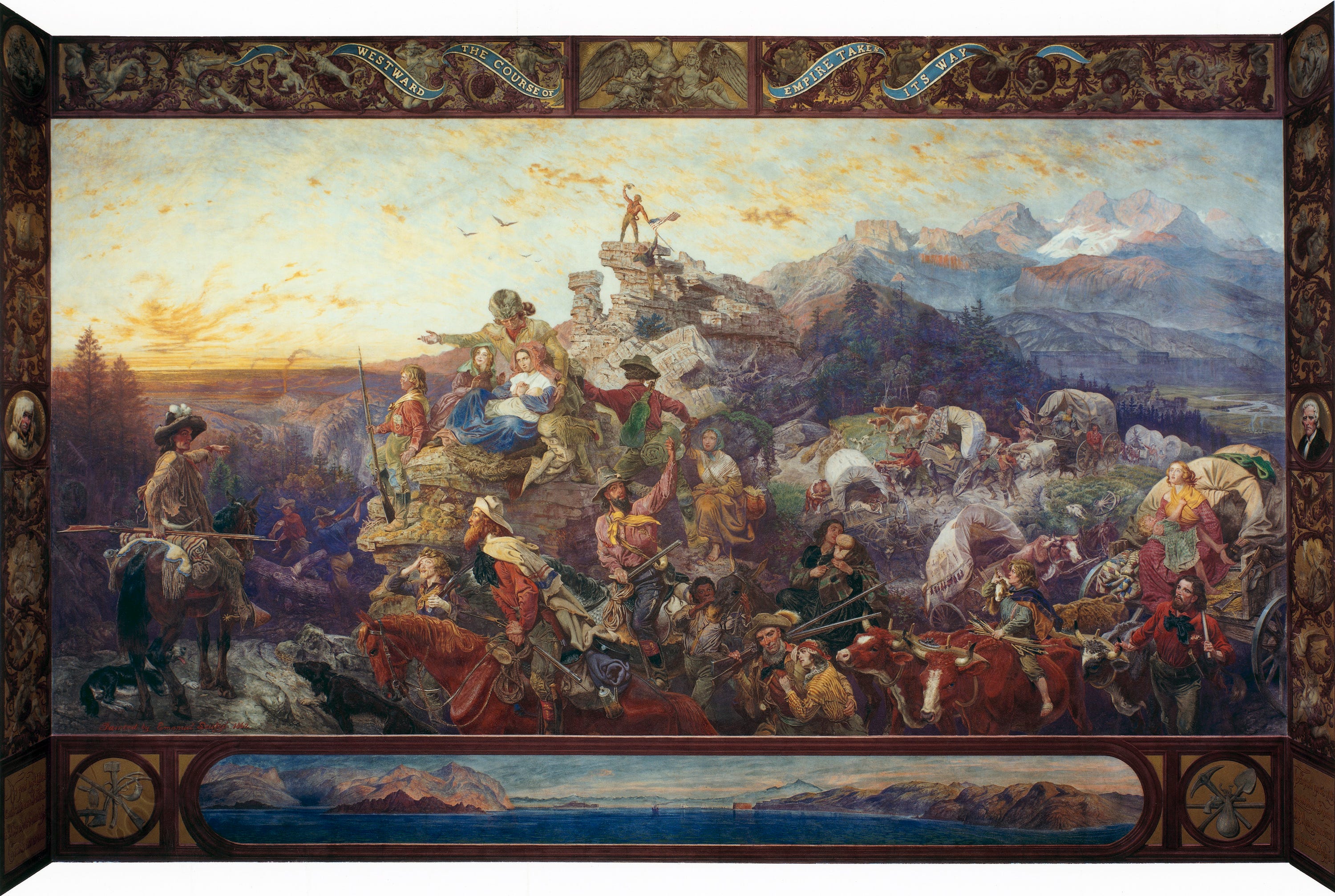
The Federal government could not survey and basically throw wildly cheap land at white settlers across the ever progressing “West” fast enough. Once there, Federal and State funds built and granted charters and monopolies for desperately needed infrastructure—turnpikes, canals, and ultimately, railroads—these private entities often entrusted with the State’s power of eminent domain. In the name of the Commerce Clause, the Federal Courts erased State and local barriers to integrated markets. The corporation transformed from an instrument of high policy (think the East India Company) to an ordinary business form, carrying with it new forms of limited liability and access to credit flowing from the numerous State and then national banks. Bankruptcy offered security for the overzealous enterprise. And all the while, State and Federal reticence of not just progressive taxation but income taxation at all—in favor of levies on railroad and utility receipts at the State level, or tariffs and excise at the Federal, each which fell largely on consumers—left capital to accumulate, and more importantly, consolidate. As Hurst put it, “[t]hus [American] industry and finance could operate within a framework of social order paid for by other people” (82).
American law only slowly began to grapple with the consequences of the vast concentrations and disparities of wealth in large part because none of this had been planned. Piecemeal legislative action and ex-post judicial cultivation had created a self-propagating monster that could not be controlled without a substantial shift in the American legal psyche toward proactive regulation, particularly the expansion of legislative cognizance into the social realm, and the development of legislative fact-finding programs to focus broad action. Of course, the Supreme Court promptly declared war on much of this, rejecting early attempts at antitrust regulation, perverting the due process clause of the Fourteenth Amendment into a shield against regulation (such as the attempts to regulate obscene railroad carriage rates), and divining the specter of socialism is all attempts to provide baseline consumer and labor protections (e.g., Lochner v. New York). But it really can’t be missed, only against the backdrop of nearly a century of pro-business State beneficence could the Supreme Court discover a policy of laissez faire.
If there’s an original sin buried in there, it’s probably tied to the American love of private property. On the first day of property law, professors regale budding American lawyers with the Tragedy of the Commons (I swear to you this is real and not just a parody of Star Wars Episode III and the Tragedy of Darth Plagueis). In the beginning, the distinguished professor declaims, was the commons, the commons was without private ownership, and all was held in common. Yet the serpent came to one shepherd and asked, truly, ye shalt graze thy sheep this much and no more? And soon enough everyone overgrazed, the commons became barren, and that’s why we have private property, to ensure we each take personal responsibility for our plot, and keep our natural capital from going to waste. Except that, to Hurst, the reckless divvying up of America into yeoman’s plots accomplished the same damn thing. Dispossessed small-farmers, broken cities and impoverished masses, destroyed environs. John Quincy Adams lamented that the Federal government had sold vast quantities of land off too cheaply as the land of “inexhaustible” natural wealth proved anything but for our voracious appetites. An 1867 Wisconsin legislative report admitted the destruction of vast swathes of State forest, “[l]ands have thus been stripped of timber which are now little better than wastes” (100). But little came of these recognitions. Market and social regulation did not attempt to change American’s fundamental relationship with property. One recognizes a similar failing in today’s suburban sprawl, paved urban wastelands, Americans cocooned into automotive-isolation, awaiting one more lane or parking lot or new road—infrastructure incapable of keeping pace with an American land-allocation policy as dysfunctional as ever.
But the indictment comes with a glimmer of hope. For Hurst, “to the men whose bid for power formed the working institution of modern private property in the seventeenth and eighteenth centuries, property was chiefly a political idea” (8). Partly traditional, political power had always rested with the landed gentry and nobility, and partly practical, control of resources inherently carries communal influence, what began in England with the official enfranchisement of the newly-landed commercial men continued in the American project of even broader enfranchisement-via-landholding (for white men, at least). This sure seems to explain why the Founders entrusted legislatures, with simple due process and Common Law “treat likes alike” property protections (e.g., the Fifth Amendment), to not interfere too much with the interests of their fellow landholding voters, why succeeding generations of legislators and judges would focus American law to economic ends, and even why the Reconstruction Congress just assumed that mere extension of the franchise, property, and contract rights to black men would solve…you know (/gestures wildly)…slavery. There are a thousand reasons why American law developed the way it did, as stupidly as it did, and a lot of it begins with our concept of property. But the recognition that property is inherently political isn’t one of them. Within the recognition that control of resources brings political power lies the forgotten corollary that political freedom rests on economic freedom. If that’s not a spark of socialism, I don’t know what is.
I tend not to share Bobby’s categorical concerns about private property, I don’t think it’s always a bad thing. But one must wonder how much of U.S. real property law was, unconsciously or consciously, colored by the primordial fact that all of the land was taken from the indigenous folk, more or less by force. They say that after you throw one punch the second is merely to justify the first. So too with us white Americans. Having stolen the land (first punch) did we not then throw more punches by insisting that the land is really, really ours, subject to no regulation and carrying no obligations on the part of the owner to others.