Following the apparently surprising political, social, and economic turmoil of the last decade or so, Harvard’s Professor Danielle Allan seeks to “revisit our understandings of current realities with fresh eyes” and to offer a new vision of Justice by Means of Democracy (Chicago Press 2023, 233 p.) (4). Unfortunately, instead of “a detailed set of rules for action” (12), Allan mainly, between bouts of exhaustive nomenclature and self-aggrandizing meta-discourse, succeeds in illustrating mainline liberalism’s continued lack of answers.
As usual, disappointment comes wrapped in promise. With reasonable brevity, Allan sets human equality as democracy’s polestar (4) and rightly rejects a grave error in traditional political theory—the primacy of negative liberties (freedoms from government intrusion) over positive liberties (freedom to engage in civic life) (21). As I distill it, democracy’s natural justice inheres not in speech or property but rather in our equal human dignity and capacity, the recognition that each is entitled to vote based on whether she can put food on the table (9). To Allan, political equality not only soothes the intrusions into autonomy necessitated by communal life. One’s active practice of political equality, by participating in civic life, constitutes the highest form of personal autonomy (27, 35). And skipping over Allan’s five facets of democracy we reach another important lesson, that democracy carries a bug: freedom encourages diversity, which can tend toward subordination. The line between freedom of association and discrimination is easily traversed. Allan’s notion of “difference without domination” reemphasizes the necessity of positive political rights as the primary guarantor of equality in our everyday lives (48).
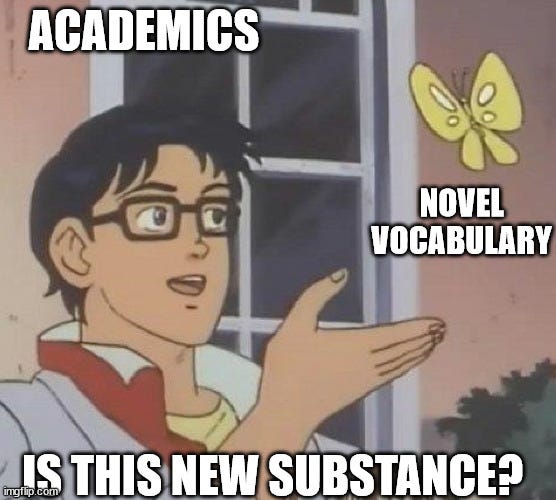
Within pages, though, the reader will find herself bombarded by terminology fit for a company-wide pep rally by the new VP, MBA, of Strategy & Vision: we need a “connected society,” “power sharing liberalism,” and—shudder—an “empowering economy” (51, 55). At first written off as the academic’s wont to mistake novel nomenclature for new substance (as so, so many do), the reader soon discerns that each barrage screens serious substantive omissions. For one brief example, the chapter on “social connectedness” offers vague proposals to encourage deep, cross-cutting social interaction, such as multi-income housing, renewed investment in transit, liberal focus groups and committees, without meaningfully addressing the underlying issue: racial and gender animus.
The obfuscation by taxonomy metastasizes in forty pages on the “ideal . . . market-based economy,” which will somehow secure rights to “property, private contract, and association” (160). Allan’s concept of “free labor” (facet no. 1), embodied in the McKinsey-esque mantra “Invest in people!” (168), ignores that our economy coerces labor by condemning “unproductive” bodies to death via starvation, exposure, or illness. Nor does her vision of “[d]emocracy-supporting firms” (facet no. 2)—shedding “shareholder capitalism” for “stakeholder capitalism” (173)—address how capital exploits that fundamental coercion to recapture surplus labor value. By the tract on “good jobs” (facet no. 3), lauding “technology driven opportunities,” public-private ventures, investment, and experimentation (177–78), one just waits with gritted teeth for the first appearance “synergies” and “dynamism” (181).
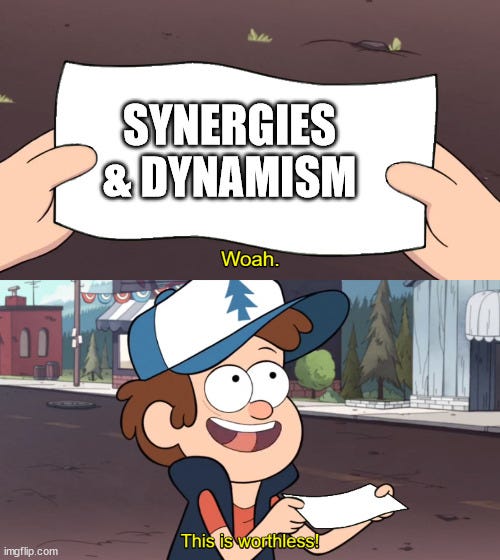
Allan’s faith in productivity—inclusive firms will outcompete (175); “put behind us . . . political fights over redistribution. Let’s instead choose a path that integrates all sectors of society into productivity” (179); and “[T]he goal with the successful production of good jobs and inclusive bridge building is to take the economy to its productive limits” (183)—boggles the mind. Set aside that the proposals don’t actually explain how to allocate the wonders of production and instead tackle the unreflective assumption of its inherent good. What has unrestrained productivity given us? iPhone replacement every two years? Giant trucks, assault rifles, and missiles designed to murder children? Food and household products that poison us? How much shit do we need? Unrestrained productivity hasn’t given us affordable medication, guaranteed access to clean water, adequate public transit, environmentally sustainable industry, or many of the goods and services necessary for the health and prosperity of all. How’re we going to synergies and dynamism our way out of that?
By this point, one realizes that Allan has forgotten that democracy is not merely a happy little philosophical exercise in self-actualization but a practical solution to people’s pressing problems—inability to put food on the table, to make rent or mortgage payments, to escape student or medical debt, or an abusive job. What does “human flourishing” mean to the parent who can’t afford to send her child to school with an EpiPen; to the kid wondering if the police will beat him or murder him on the way home from school; to the migrant laborer waiting for the knock in the night to send him to a concentration camp. Allan’s reduction of Lincoln from constitutional expositor to mere economic policymaker (132) naturally misses that his vision of democracy manifested first and foremost in freeing those in bondage.
Beyond ignoring the immediate subordination facing ordinary people, Allan also ignores the realities plaguing our institutions. When does a minoritarian check on deliberation transform into a shackle (the Senate) or, worse, minoritarian seizure of power (the Electoral College)? Does not minority rule contradict the notion of consent? Allan offers no answer, instead confining herself to a modest expansion of the House of Representatives to rebalance Congress and the College (78). Elsewhere, in a desperately bipartisan criticism of pretty-clearly President Obama’s use of the executive order (93), Allan utterly misdiagnoses the causes of Congressional gridlock and abdication: the Supreme Court’s arrogation of power, national-security aggrandizement of the Presidency, Republicans’ decisive turn against effective governance since the 90s, and (of course) the original trigger for fear of Congressional authority generally: abolition. And her criticism of expert administrative agencies, that Congress should not abdicate to “technocrats” both echoes a Republican-manufactured specter—Congress already retains complete oversight over all such agencies—and completely fails to distinguish between more politically-driven agencies like the Federal Trade Commission, the FBI, Equal Employment Opportunity Commission, or National Labor Relations Board, and the more cut-and-dry expert ones like the Federal Aviation Administration (185).
At bottom, this failure to grapple with bad actors in the system compromises the entire notion of democracy. It begins with the usual meaningless lesson: “Compromise” in the face of faction and polarization “is what allows us to stay together in the space we share” (97–98). What do we do when someone pulls a gun out in that shared space? Allan’s vision of citizenship doesn’t answer:
Fair fighters seek to best their opponents within the scope of agreed-upon rules by mobilizing noncommitted groups to their side. They do not seek to obliterate their adversaries, nor to alter those rules to present subsequent competition. ‘Fair fighting’ is characterized by the dignity and rights of ones’ rivals . . . and by norms of forbearance and tolerance.
[C]ivic education needs to foster development of the skill of civil disagreement, perspective-taking, and bridging relationships . . . norms of fair-fighting and nonviolence . . . .
(224-26). One has to wonder what world Allan lives in, we’re not even four years out from the January 6 coup attempt. We need a model of democratic justice that can survive the antidemocratic and subordinative tendencies of a surprisingly cohesive plurality of the American population. Most readers will surely join the appeal to ballots over bullets in the first instance. But letting Preston Brooks walk free didn’t avoid the Civil War. A theory of democratic justice incapable of preserving itself is illusory. Rawls erred when he prized negative liberty over positive, but one doubts he erred in drawing a baseline to defend. Allan’s focus on what we might hope for in democracy, at the expense of what we must demand of freedom, leaves the entire project exposed.
Shall government by, of, and for the people perish from the earth? Shall we compromise women’s bodily autonomy in the name of unity? Shall we compromise black voting rights in the name of unity? Shall we, Senator Douglas, compromise freedom in the name of nonviolence? Of course not! Political compromise rests upon and serves the fundamental democratic principle of consent—the recognition of our equality, that no man is good another rule over another without first soliciting and achieving his agreement—it is not an end in itself. That is, ironically, political compromise rests on an uncompromising baseline. Ignoring this, in an increasingly typical liberal incapacity to distinguish between principle and politics, and between that which might be compromised in service of a goal and that which cannot be without sacrificing the whole endeavor, Allan effectively recasts the Emancipator himself as anathema to her democratic vision of justice. Toss another nickel on Jaffa’s gravestone.